Megalith: From Silence to Self-Expression, Building a Voice Through Hip-Hop
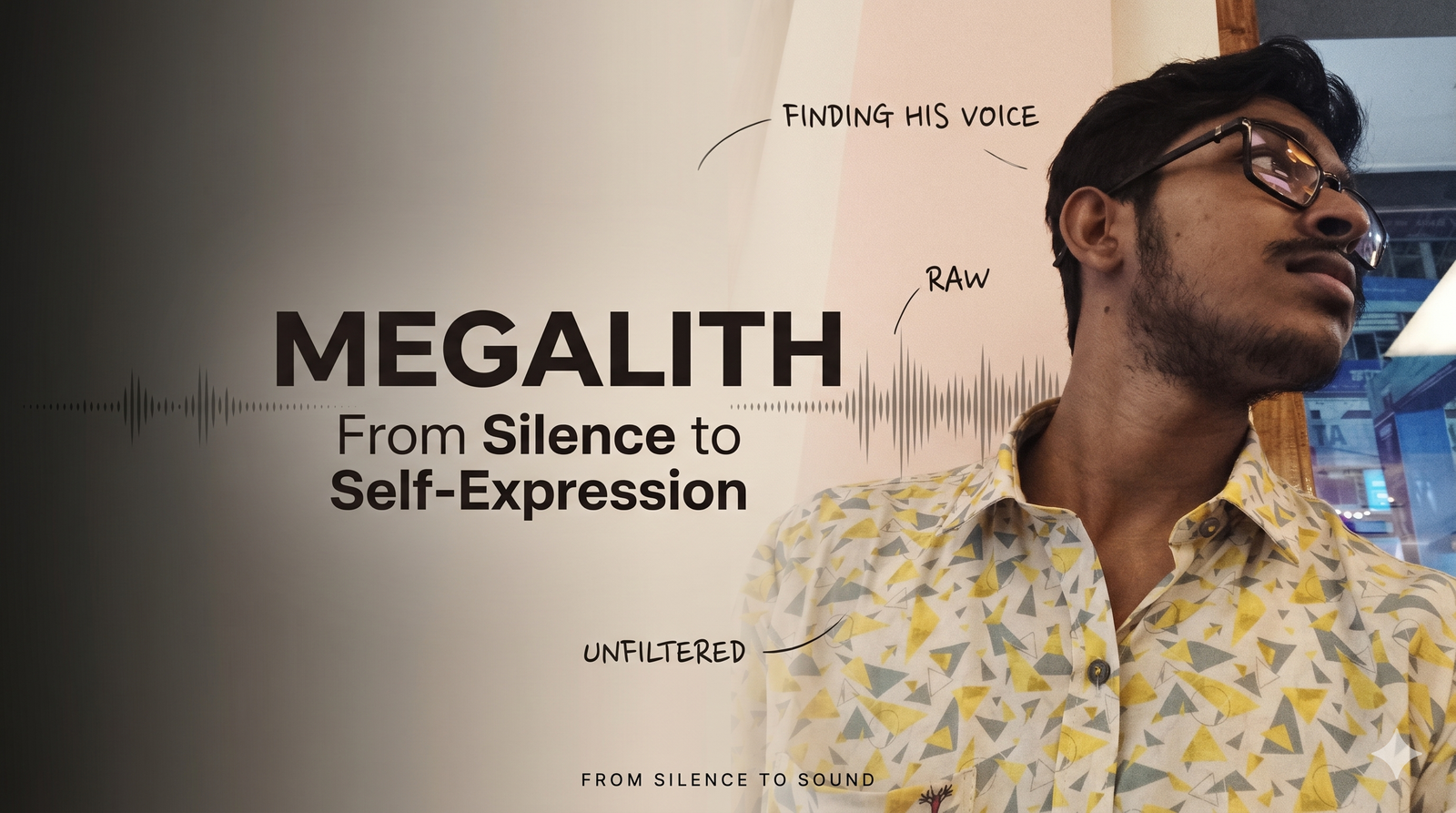
Some artists grow up speaking their truth.
For Megalith, the journey started with not being heard.
Based in Malda, India, Bishal Halder’s relationship with music began early, but not in the way his current sound might suggest. His foundation was rooted in classical music and Rabindra Sangeet, shaped during his school years.
At that stage, music was discipline.
Structure.
Training.
Foundation.
But it was not yet his voice.
Finding Hip-Hop, Finding Expression
Like many artists, his entry into hip-hop came through popular exposure, artists like Honey Singh and Badshah introduced him to the space.
But that was only the surface.
The real shift came later.
When he was introduced to Eminem.
That changed everything.
It was not just about flow or technical skill. It was about what hip-hop allowed you to do. Speak without filters. Turn emotions into words. Use music as a direct outlet for things that had no other place.
That is when music stopped being something he learned.
It became something he needed.
The Weight of Being Unheard
One of the most defining aspects of Megalith’s journey is silence.
Not chosen silence.
Imposed silence.
He describes himself as someone who always spoke less, often labeled as lazy, unsocial or disconnected. But internally, that was not the truth.
He had things to say.
Experiences to share.
But over time, things changed.
People stopped listening.
Trust started breaking.
Personal moments were not respected.
That created distance.
And eventually, trust issues.
That is where hip-hop entered as more than music.
It became a voice.
A place to channel anger, frustration, sadness and even confidence, everything that stayed suppressed otherwise.
From Rejection to Reinforcement
Early reactions to his music were not encouraging.
People around him dismissed it.
Told him to focus on studies.
Considered it a waste of time.
This is where most journeys stop.
His did not.
A key turning point came through unexpected support, his Maths teacher in Class 11. That encouragement changed how he saw his own potential.
For the first time, music felt possible.
Later, during medical college, support from friends and seniors reinforced that belief. That environment helped him move from casual creation to serious commitment.
Honesty as Identity
What defines Megalith’s music is not complexity or trend-following.
It is honesty.
He does not write to impress.
He writes to express.
His music is built around:
- real experiences
- introspection
- emotional depth
- personal growth
At the same time, he experiments with sound, blending classical influence with trap and R&B elements to create a style that reflects both his roots and his current space.
There is a clear focus on growth.
Each track is not just a release.
It is a step forward.
Themes That Stay Grounded
The core of his work revolves around reality.
Not exaggerated stories.
Not artificial narratives.
But real talk.
His themes include:
- personal struggles
- motivation
- perspective
- emotional journeys
- triumph over setbacks
The intention is simple.
Keep it real.
Featured Tracks: Growth and Expression
Tracks like Super Mario and Andaaz represent different facets of his artistry.
They showcase his ability to move between vibe and depth, balancing energy with meaning while maintaining a consistent emotional thread.
These songs are not just performances.
They are reflections of where he is in his journey.
Building Without a System
One of the biggest realities Megalith faces is independence.
He handles everything himself:
- idea generation
- writing
- recording
- mixing and mastering
All of this comes with limitations.
Budget constraints.
Lack of professional equipment.
No dedicated team.
On top of that, academic pressure adds another layer of difficulty, limiting time and consistency.
This is not an optimized system.
It is a self-built one.
What Comes Next
His upcoming track ZEHER reflects a deeper emotional direction.
Focused on heartbreak, the song explores the spectrum of emotions that come with it, not just sadness, but confusion, intensity and internal conflict.
This signals a continuation of his core theme.
Turning personal experiences into structured expression.
The Meaning Behind the Journey
Megalith’s journey is not about instant recognition.
It is about transformation.
From someone who felt unheard, to someone who found a way to express everything through music.
From silence to voice.
From internal chaos to creative output.
The Takeaway
Megalith is not trying to fit into the scene.
He is trying to build his place within it.
Through honesty.
Through consistency.
Through growth.
His message is not complicated.
Struggles are part of the process.
They shape who you become.
They push you forward.
And sometimes, the most important thing an artist can do is simple.
Keep going.
And keep the part of yourself alive that started it all.
Community Talk.
Join the conversation
Login NowBe the first to comment!